Airbag system
Introduction
Section titled “Introduction”This chapter contains information on the following subjects:
- Types of front passenger airbag system
- Indicator lamps
- Description and function of the airbags
- Front airbags
- Deactivating and activating the front passenger front airbag manually with the key-operated switch
- Side airbags
- Combined head and side airbags
- Head airbags
The vehicle is equipped with a front airbag for the driver and the front passenger. The front airbags can provide additional protection for the chest of the driver and front passenger if the seat, the seat belts, the head restraints and, for the driver, the steering wheel are adjusted and used correctly. The airbags are designed to provide additional protection. They are not a substitute for the seat belts, which must always be fastened, even when the front seats are equipped with front airbags.
Additional information and warnings:
Section titled “Additional information and warnings:”- Driving tips
- Central locking system
- Correct sitting position
- Seat belts
- Child seats (accessories)
- Cleaning and caring for the interior
- Accessories, parts replacement, repairs and modifications
- Consumer information
Types of front passenger front airbag system
Section titled “Types of front passenger front airbag system”First read and observe the introductory information and safety warnings .
Volkswagen offers two different front passenger airbag systems:
| A | B |
|---|---|
| Features of a front passenger front airbag that can only be deactivated by a qualified workshop. | Features of a front passenger front airbag that can be deactivated manually with the key-operated switch ⇒ Deactivating the front passenger front airbag |
|
|
Designation: airbag system. | Designation: airbag system with front passenger airbag switch. |
Indicator lamps
Section titled “Indicator lamps”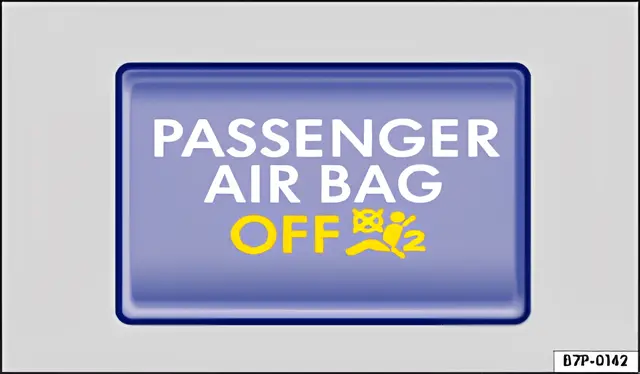
Fig. 55 In the upper part of the centre console: indicator lamp for the deactivated front passenger front airbag
First read and observe the introductory information and safety warnings .
| Lights up | Location | Possible cause | Solution |
|---|---|---|---|
Instrument cluster | The airbag and belt tensioner system is faulty. | Visit a qualified workshop and have the system checked immediately. | |
Upper part of the centre console | The airbag system is faulty. | Visit a qualified workshop and have the system checked immediately. | |
The front passenger front airbag is deactivated. | Check whether the airbag has to remain deactivated. |
Some warning and indicator lamps light up for a function check when the ignition is switched on. They go out after a few seconds.
If the front passenger front airbag is deactivated and the PASSENGER AIR BAG OFF indicator lamp in the upper part of the centre console does not light up continuously, or lights up together with the indicator lamp in the instrument cluster, there may be a fault in the airbag system ⇒ .
Description and function of the airbags
Section titled “Description and function of the airbags”First read and observe the introductory information and safety warnings .
In an accident, an airbag can protect the occupants by cushioning their movement in the direction of the impact in frontal and side collisions.
Every triggered airbag is inflated by a gas generator. At the same time, the relevant covers of the airbag module burst open and the airbags inflate forcefully into their deployment zones within milliseconds. When a belted occupant sinks into the inflated airbag, the gas it contains escapes in order to catch and decelerate the occupant. This can reduce the risk of severe and fatal injuries. Other injuries, such as swellings, bruises, burns and grazes, cannot be ruled out when an airbag deploys.
The airbags do not provide protection for the arms and the lower parts of the body.
The most important factors for the deployment of an airbag are the type of accident, the angle of impact, the speed of the vehicle and the nature of the object that the vehicle strikes. The airbags therefore do not deploy every time the vehicle is visibly damaged.
The deployment of the airbag system depends on the rate of deceleration of the vehicle caused by the impact, which is registered by the electronic control unit. If the rate of deceleration is below the reference value programmed into the control unit, the airbags will not be triggered in an accident, even though the vehicle may be severely damaged. Damage to the vehicle, the repair costs or even the absence of damage in an accident are not necessarily an indication of whether an airbag should have deployed. As individual accident situations can vary greatly, it may not be possible to define a range of vehicle speeds and reference values. It is therefore not possible to predict every type and angle of impact that could lead to an airbag deploying. Important factors for the deployment of the airbags include the properties of the object struck by the vehicle (hard or soft), the angle of impact and the speed of the vehicle.
The airbags serve only as a supplement to the three-point automatic seat belts in certain accident situations, when the deceleration of the vehicle is sufficient to trigger them. The airbags are only triggered once and only under certain conditions. The seat belts are always there to provide protection in situations in which the airbags should not deploy, or in which the airbags have already deployed - for example if the vehicle collides with another vehicle after the first impact, or is struck by another vehicle.
The airbag system is part of the vehicle’s overall passive safety concept. The airbag system can only provide the best possible protection in conjunction with correctly fastened seat belts and a correct sitting position ⇒ Adjusting the seat position.
Components of the vehicle safety concept
Section titled “Components of the vehicle safety concept”The following equipment in the vehicle together forms the vehicle safety concept, which reduces the risk of severe and fatal injuries. Depending on the equipment, some of these components may not be fitted in a particular vehicle, or may not be available in some markets.
- Optimised seat belts on all seats.
- Belt tensioners for the driver and front passenger.
- Belt force limiters for the driver and front passenger and, where applicable, on the outer rear seats.
- Seat belt height adjustment on the front seats.
- Warning lamp
- Front airbags for the driver and front passenger.
- Combined head and side airbags for the driver and front passenger.
- Head airbags on the right and left sides.
- Airbag indicator lamp .
- PASSENGER AIR BAG OFF - indicator lamp in the upper part of the centre console.
- Control units and sensors.
- Height-adjustable head restraints optimised for rear-end collisions.
- Adjustable steering column.
- Where applicable, child seat anchorage points on the rear seats.
- Where applicable, anchorage points for the top tether of a child seat.
Situations in which the front airbags, side airbags or combined head and side airbags are not triggered
Section titled “Situations in which the front airbags, side airbags or combined head and side airbags are not triggered”- If the ignition is switched off at the time of the collision.
- If, in a collision with the vehicle in front, the deceleration measured by the control unit is too low.
- In minor side collisions.
- In rear-end collisions.
- If the vehicle rolls over.
- If the impact speed is lower than the required reference value stored in the control unit.
Front airbags
Section titled “Front airbags”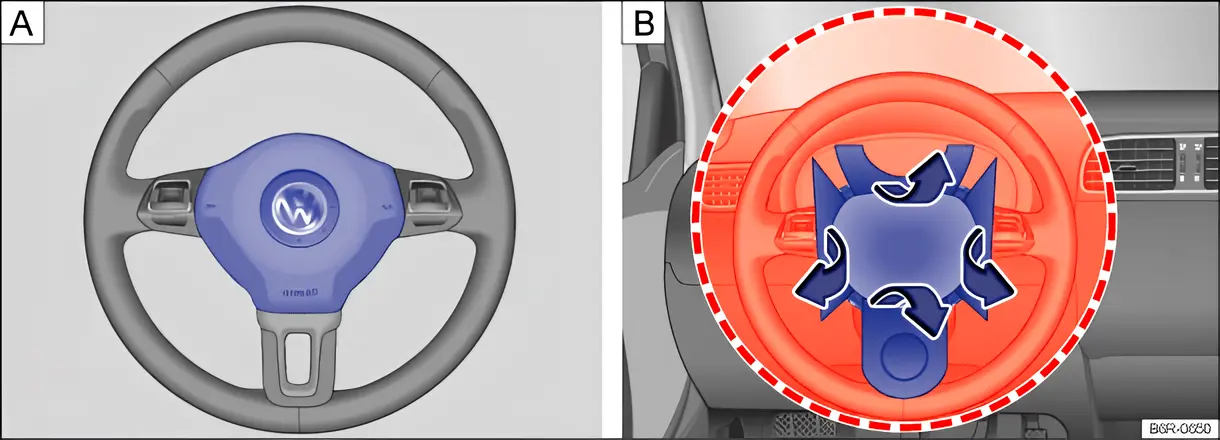
Fig. 56 Location and deployment zone of the driver front airbag
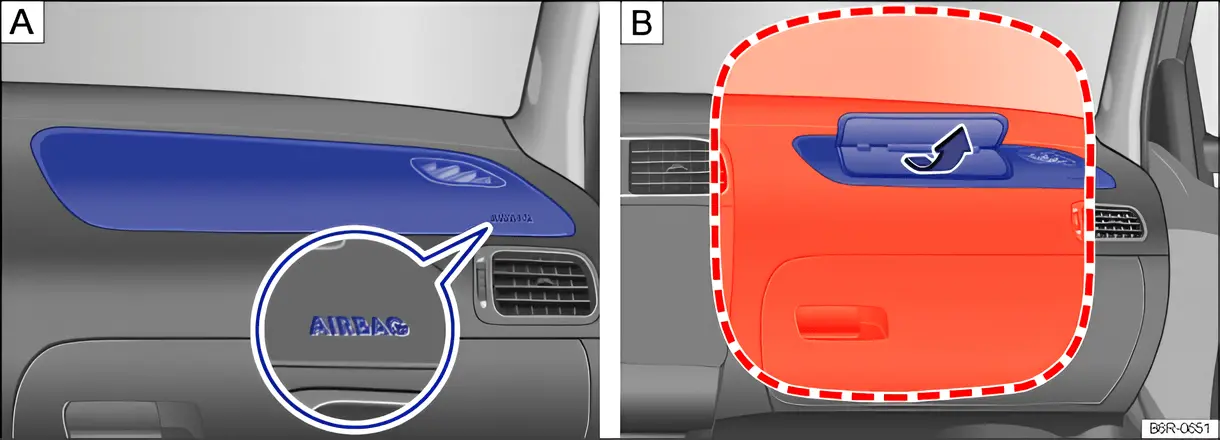
Fig. 57 Location and deployment zone of the front passenger front airbag
First read and observe the introductory information and safety warnings .
In addition to the seat belts, the front airbag system provides additional protection for the head and upper body of the driver and front passenger in frontal collisions of high severity. Always maintain the greatest possible distance from the front airbag ⇒ Adjusting the seat position. This allows the front airbags to inflate fully when triggered and provide maximum protection.
The driver front airbag is located in the steering wheel ⇒ fig. 56 A and the front passenger front airbag in the dash panel ⇒ fig. 57 A. The installation locations of the airbags are marked with the word “AIRBAG”.
The areas outlined in red ⇒ fig. 56 B and fig. 57 B are taken up by the inflating front airbags (deployment zone). Never place or attach any objects in these areas ⇒ . Factory-fitted components, such as a mobile phone cradle, are not reached by the inflating driver and front passenger front airbags.
When the driver and front passenger front airbags inflate, the airbag covers in the steering wheel fig. 56 B or in the dash panel ⇒ fig. 57 B fold open.
Switching the front passenger front airbag on and off manually using the key-operated switch
Section titled “Switching the front passenger front airbag on and off manually using the key-operated switch”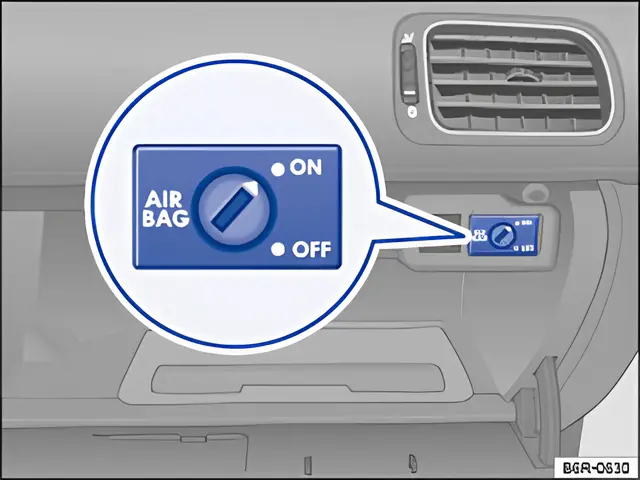
Fig. 58 In the stowage compartment on the front passenger side: key-operated switch for activating and deactivating the front airbag
First read and observe the introductory information and safety warnings .
The front airbag must be deactivated when a rearward-facing child seat is fitted on the front passenger seat.
Disabling the front passenger front airbag
Section titled “Disabling the front passenger front airbag”- Switch off the ignition.
- Open the stowage compartment on the front passenger side.
- Fold out the key bit of the vehicle key fully ⇒ Vehicle key set
- Insert the fully folded-out key bit into the switch in the stowage compartment ⇒ fig. 58 as far as the second detent position. The key bit is then inserted approximately 3/4 of the way into the switch ⇒ .
- Turn the vehicle key to the OFF position without using excessive force.
- Pull the vehicle key out of the switch ⇒ and fold in the key bit.
- Close the stowage compartment on the front passenger side.
- The PASSENGER AIR BAG OFF indicator lamp in the upper part of the centre console lights up continuously when the ignition is switched on ⇒ Indicator lamps.
Enabling the front passenger front airbag
Section titled “Enabling the front passenger front airbag”- Switch off the ignition.
- Open the stowage compartment on the front passenger side.
- Fold out the key bit of the vehicle key fully ⇒ Vehicle key set
- Insert the fully folded-out key bit into the switch in the stowage compartment ⇒ fig. 58 as far as the second detent position. The key bit is then inserted approximately 3/4 of the way into the switch ⇒ .
- Turn the vehicle key to the ON position without using excessive force.
- Pull the vehicle key out of the switch ⇒ and fold in the key bit.
- Close the stowage compartment on the front passenger side.
- Check that the PASSENGER AIR BAG OFF indicator lamp in the upper part of the centre console does not light up when the ignition is switched on ⇒ Indicator lamps.
Identifying characteristics for a disabled front passenger front airbag
Section titled “Identifying characteristics for a disabled front passenger front airbag”A deactivated front passenger front airbag is indicated only by the continuously illuminated PASSENGER AIR BAG OFF indicator lamp in the upper part of the centre console (OFF lights up continuously in yellow) ⇒ Indicator lamps.
If the PASSENGER AIR BAG OFF indicator lamp in the upper part of the centre console does not light up continuously, or lights up together with the indicator lamp in the instrument cluster, no child restraint system may be fitted on the front passenger seat for safety reasons. The front passenger front airbag could deploy in an accident.
Side airbags
Section titled “Side airbags”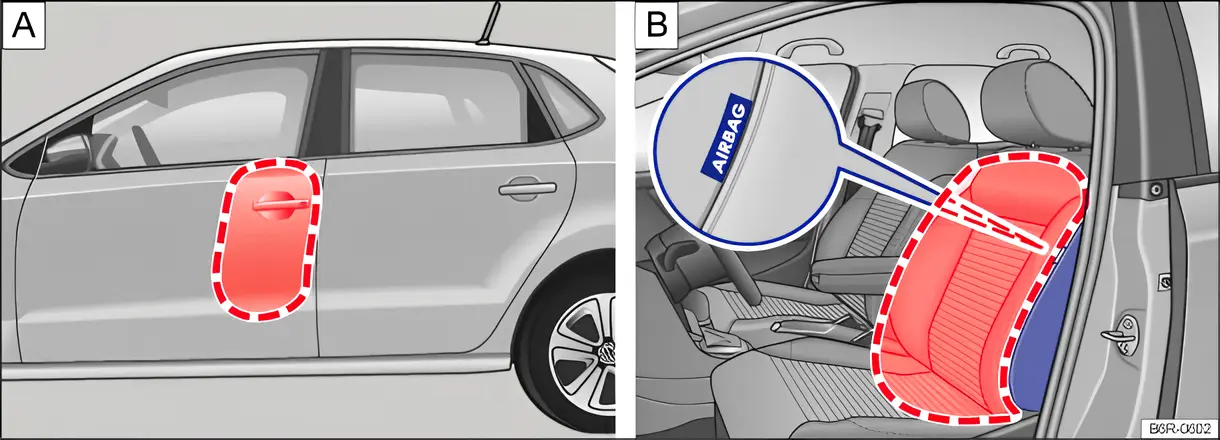
Fig. 59 On the left side of the vehicle: deployment zone of the side airbag (variant A). On the side of the front seat: location and deployment zone of the side airbag (variant B)
First read and observe the introductory information and safety warnings .
The side airbags are located in the upholstery of the backrests ⇒ fig. 59 B of the driver seat and the front passenger seat. The installation locations are marked with an “AIRBAG” label.
The areas outlined in red ⇒ fig. 59 show the space taken up by the inflated side airbags (deployment zones). Never place or attach any objects in these areas ⇒ .
In a side collision, the side airbags on the side of the vehicle that is struck are triggered and reduce the risk of injury to the occupants in the areas of the body exposed to the impact.
Combined curtain and side airbags
Section titled “Combined curtain and side airbags”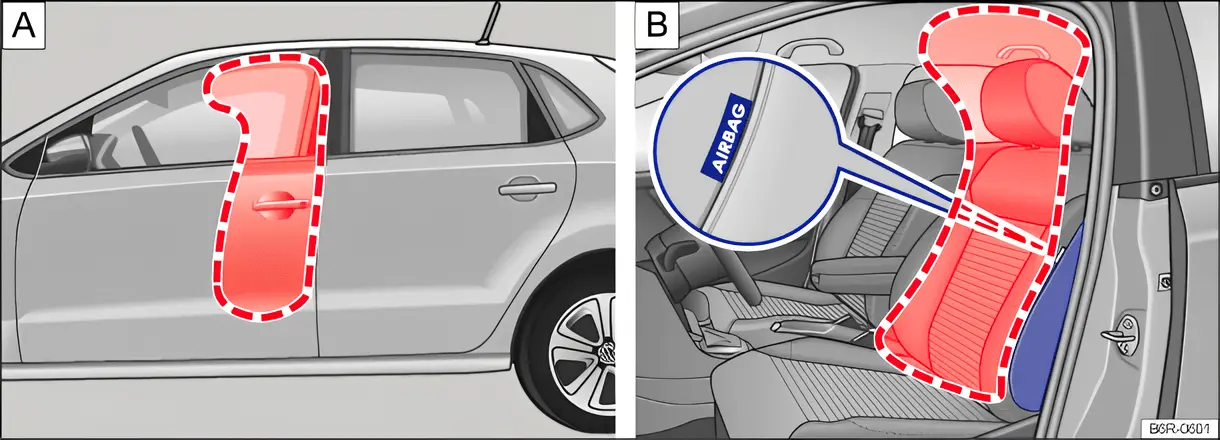
Fig. 60 On the left side of the vehicle: deployment zone of the combined head and side airbags (variant A). On the side of the front seat: location and deployment zone of the combined head and side airbags (variant B)
First read and observe the introductory information and safety warnings .
The combined head and side airbags are located in the backrests ⇒ fig. 60 B of the driver seat and the front passenger seat. The installation locations are marked with an “AIRBAG” label.
The areas outlined in red ⇒ fig. 60 show the space taken up by the inflated combined head and side airbags (deployment zones). Never place or attach any objects in these areas ⇒ .
In a side collision, the combined head and side airbags on the side of the vehicle that is struck are triggered and reduce the risk of injury to the occupants in the areas of the body exposed to the impact.
Curtain airbags
Section titled “Curtain airbags”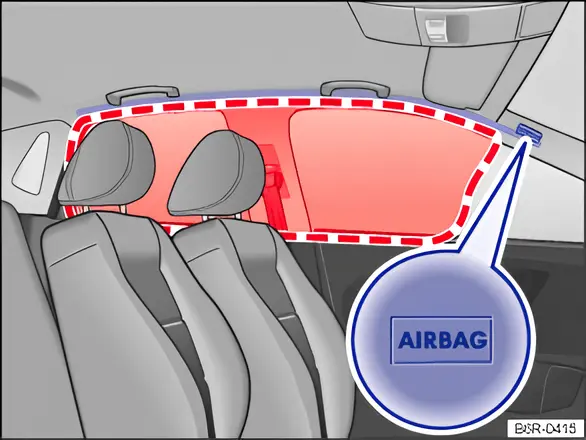
Fig. 61 On the left side of the vehicle: location and deployment zone of the head airbags
First read and observe the introductory information and safety warnings .
There is one head airbag on the driver side and one on the front passenger side, inside the vehicle above the doors ⇒ fig. 61. The location is marked with the word “AIRBAG”.
The area outlined in red ⇒ fig. 61 is taken up by the inflated head airbag (deployment zone). Never place or attach any objects in this area ⇒ .
In a side collision, the head airbag on the side of the impact is triggered.
In side collisions, the head airbags reduce the risk of injury in the areas of the body exposed to the impact for occupants of the front seats and the outer rear seats.