Child seats (accessories)
Introduction
Section titled “Introduction”This chapter contains information on the following subjects:
- General information about transporting children in the vehicle
- Different securing systems
- Using a child seat on the front passenger seat
- Using a child seat on the rear seats
- Securing a child seat with the seat belt
- Securing a child seat with the lower anchorage points (ISOFIX)
- Securing a child seat with the Top Tether
Before transporting babies and children in a child seat on the front passenger seat, it is essential to read the information about the airbag system carefully.
This information is very important for the safety of the driver and of all vehicle occupants, especially babies and small children.
Volkswagen recommends using child seats from the Volkswagen Genuine Accessories range. These child seats have been designed and tested for use in Volkswagen vehicles. Child seats with a wide variety of securing systems are available from Volkswagen dealerships.
Additional information and warnings
Section titled “Additional information and warnings”A child seat that has been subjected to loading in an accident must be renewed, as it could have sustained damage that is not visible.
General information on transporting children in the vehicle
Section titled “General information on transporting children in the vehicle”First read and observe the introductory information and safety warnings .
Laws and regulations always take precedence over the descriptions in this owner’s manual. The use of child seats and the ways in which they can be secured are covered by various standards and regulations ⇒ Classification of child seats into groups in accordance with ECE-R 44. In some countries, for example, the use of child seats on certain seats in the vehicle may be prohibited.
The laws of physics that act on the vehicle in a collision or any other type of accident also apply to children ⇒ Seat belts. Unlike adults and adolescents, the muscles and bones of a child are not yet fully developed. Children are therefore at greater risk of severe injury in an accident than adults.
As a child’s body is not fully developed, restraint systems specially adapted to their height, weight and physical build must be used for children. In many countries, laws are in force that require the use of approved restraint systems for babies and small children.
Only use suitable child seats that are approved for this vehicle model. If in doubt, always contact a Volkswagen dealership or a qualified workshop.
Checklist
Section titled “Checklist”Transporting children in the vehicle ⇒ .
- Observe the country-specific legal requirements.
- Volkswagen recommends always transporting children under the age of 12 on the rear seats ⇒ Using a child seat on the rear seats. The safest place in the vehicle is the rear seat behind the front passenger seat.
- Always secure a child in the vehicle in a child restraint system. The restraint system must always be suitable for the child’s height, weight and physical build.
- As a rule, only one child may be transported in a child seat.
- Read the instructions supplied by the child seat manufacturer and always carry them in the vehicle.
- When securing a child seat with the seat belt, insert or route the belt through the child seat in accordance with the information provided by the child seat manufacturer.
- Ensure that the seat belt routing is correct for the child and that the child assumes a correct sitting position.
- It is best to fit the child seat on the rear seat behind the front passenger seat, so that the child can get out on the pavement side.
- Never leave toys or other loose objects on the child seat or on the seat while the vehicle is in motion.
Country-specific standards for child seats (selection)
Section titled “Country-specific standards for child seats (selection)”Child seats must comply with the ECE-R 44 standard 1). Further information is available from Volkswagen dealerships and online at www.volkswagen.com.
1) ECE-R: Economic Commission for Europe regulation.Group classification for child seats according to ECE-R 44
Section titled “Group classification for child seats according to ECE-R 44”| Weight class | Weight of the child | Age |
|---|---|---|
| Weight group 0 | Up to 10 kg | up to approx. 9 months |
| Weight group 0+ | Up to 13 kg | up to approx. 18 months |
| Weight group 1 | 9 to 18 kg | approx. 8 months to 3½ years |
| Weight group 2 | 15 to 25 kg | approx. 3 to 7 years |
| Weight group 3 | 22 to 36 kg | approx. 6 to 12 years |
Not every child fits into the child seat for their weight group. Likewise, not every child seat fits into every vehicle. Always check that the child fits into the child seat and that the child seat can be secured correctly in the vehicle.
Child seats that comply with the ECE-R 44 standard carry the ECE-R 44 test mark on the seat: a capital letter E in a circle, with the test number below it.
Various securing systems
Section titled “Various securing systems”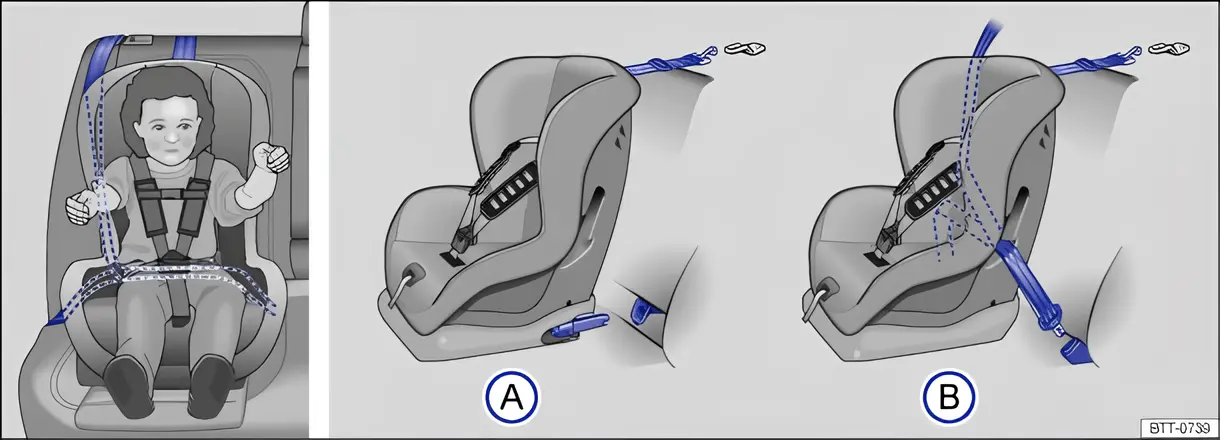
Fig. 62 On the rear seats: illustration A shows the principle of securing a child restraint system to the lower anchorage points and with a top tether. Illustration B shows a child restraint system secured with the vehicle seat belt.
First read and observe the introductory information and safety warnings .
Always secure child seats in the vehicle correctly and safely, in accordance with the fitting instructions supplied by the child seat manufacturer.
A fitted child seat must lie closely against the vehicle seat and must not move or tilt by more than 2.5 cm.
Child seats equipped with a Top Tether retaining strap must also be secured in the vehicle with the Top Tether. Only attach the retaining strap to the anchorage points intended for this purpose. Always tighten the Top Tether retaining strap so that the child seat lies closely and firmly against the corresponding seat.
Country-specific securing systems
Section titled “Country-specific securing systems”Securing variants ⇒ fig. 62
A ISOFIX anchorage points and top tether.
The systems comprise securing the child seat with a top tether (Top Tether) and with the lower anchorage points in the seat.
Using a child seat on the front passenger seat
Section titled “Using a child seat on the front passenger seat”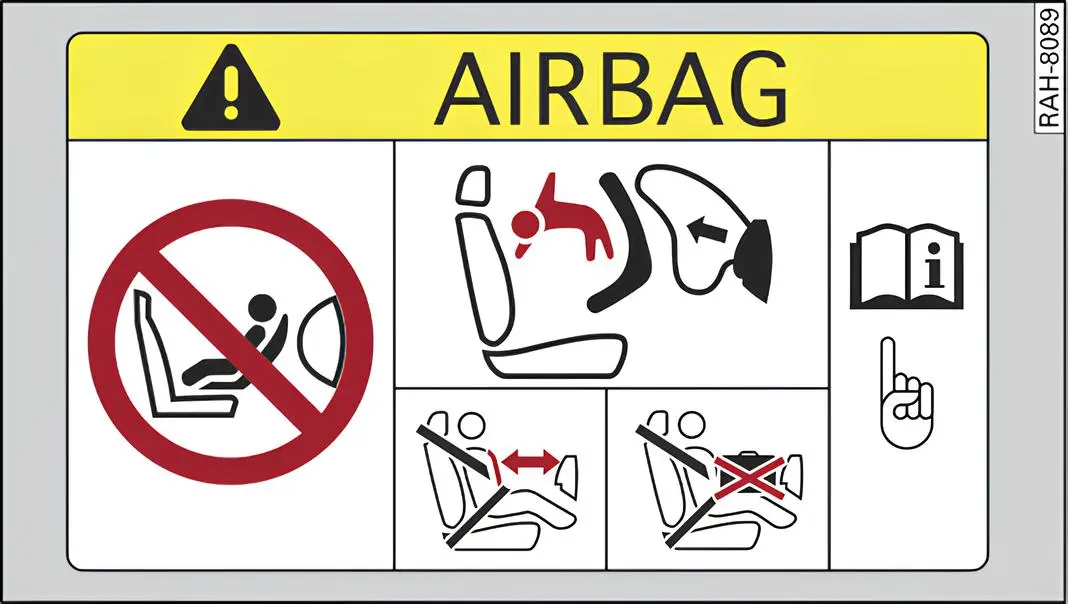
Fig. 63 On the front passenger sun visor: airbag sticker
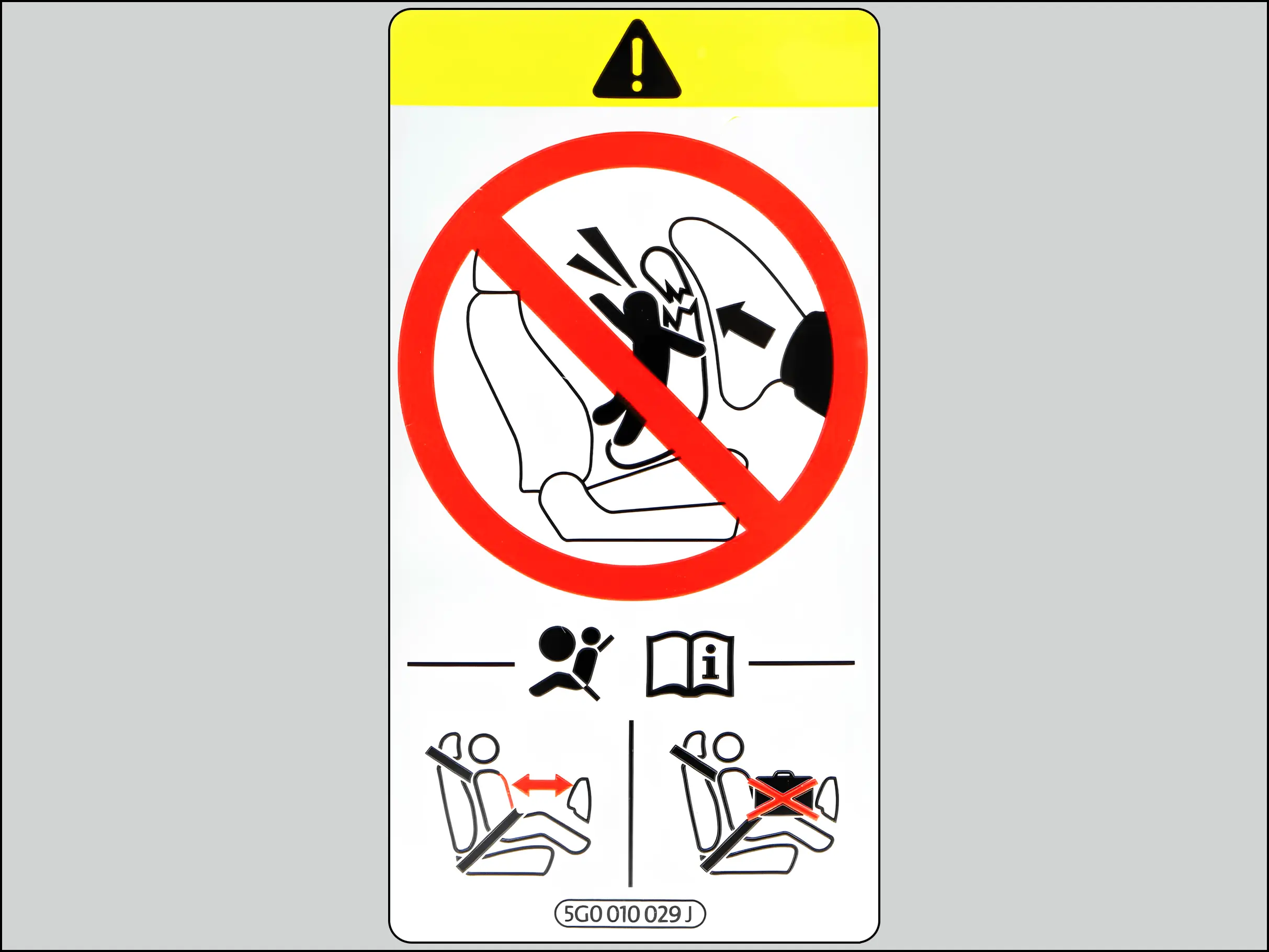
Fig. 64 On the B-pillar on the front passenger side: airbag sticker
First read and observe the introductory information and safety warnings .
Transporting children on the front passenger seat is not permitted in all countries. Not every child seat is approved for use on the front passenger seat. Volkswagen dealerships hold an up-to-date list of all approved child seats. Only use a child seat that is approved for the vehicle in question.
An activated front airbag on the front passenger side poses a very serious danger to a child. The front passenger seat is dangerous for a child if the child is transported in a rearward-facing child seat.
If the front airbag is triggered, a rearward-facing child seat on the front passenger seat could be struck with such force that life-threatening or fatal injuries result ⇒ . Never use a rearward-facing child seat on the front passenger seat while the front passenger front airbag is activated.
A rearward-facing child seat may only be used on the front passenger seat if the front passenger front airbag is deactivated. This is indicated by the yellow PASSENGER AIR BAG OFF indicator lamp ⇒ Airbag system. If the front passenger front airbag is not deactivated and remains active, children must not be transported on the front passenger seat ⇒ .
Airbag sticker
Section titled “Airbag sticker”A sticker with important information about the front passenger front airbag may be located on the front passenger sun visor ⇒ fig. 63 or on the B-pillar on the front passenger side ⇒ fig. 64. The content of the sticker depends on the market and may vary. Depending on the market, the airbag sticker on the sun visor may also be attached to the sun visor on the driver side. In some countries, airbag stickers may be present both on the sun visor and on the B-pillar on the front passenger side. It is essential to observe the warnings before fitting a rearward-facing child seat ⇒ .
What to be aware of when using a child seat on the front passenger seat
Section titled “What to be aware of when using a child seat on the front passenger seat”- With a rearward-facing child seat, the front passenger front airbag must be deactivated ⇒ Airbag system.
- The backrest of the front passenger seat must be in the upright position.
- The front passenger seat must be pushed all the way back.
- The height adjustment of the front passenger seat must be set to the highest position.
- The seat belt height adjustment must be in the highest position.
Suitable child seats
Section titled “Suitable child seats”The child seat must be expressly approved by the manufacturer for use on the front passenger seat in a vehicle with a front airbag or side airbag, or with a combined head and side airbag.
Universal child seats in accordance with the ECE-R 44 standard for weight groups 0, 0+, 1, 2 or 3 may be fitted on the front passenger seat.
Some child restraint systems have a support leg that rests on the vehicle floor. Child restraint systems with a support leg may be used on the front passenger seat.
Using a child seat on the rear seats
Section titled “Using a child seat on the rear seats”First read and observe the introductory information and safety warnings .
When securing a child seat on a rear seat, adjust the position of the front seat so that the child has sufficient room. Then adapt the front seat to the size of the child seat and the height of the child. Also observe the sitting position of the front passenger while doing so ⇒ Adjusting the seat position.
Suitable child seats
Section titled “Suitable child seats”The child seat must be approved by the manufacturer for use on the rear seats with side airbags or with combined head and side airbags.
Universal child seats in accordance with the ECE-R 44 standard for weight groups 0, 0+, 1, 2 or 3 may be fitted on the rear seats.
The outer rear seats may be designed for fitting child seats with the ISOFIX system that are expressly approved for this vehicle model in accordance with the ECE-R 44 standard.
Some child restraint systems have a support leg that rests on the vehicle floor. Child restraint systems with a support leg may only be used on the outer rear seats. Child restraint systems with a support leg must not be used on the centre rear seat.
ISOFIX child seats approved for use on the rear seats
Section titled “ISOFIX child seats approved for use on the rear seats”ISOFIX child seats are divided into the approval categories “universal”, “semi-universal” and “vehicle-specific”.
- If an ISOFIX child seat has “universal” approval, it must be secured to the lower anchorage points and fastened with the Top Tether retaining strap.
- For ISOFIX child seats with “semi-universal” or “vehicle-specific” approval, check before use whether the child seat is approved for this vehicle. For this purpose, the child seat manufacturer supplies a list of vehicles for which the ISOFIX child seat is approved together with the seat. If necessary, contact the child seat manufacturer for an up-to-date vehicle list.
Securing a child seat with the seat belt
Section titled “Securing a child seat with the seat belt”First read and observe the introductory information and safety warnings .
Child seats marked universal on the orange label can be secured with the seat belt on the seats marked u in the table.
| Weight group | Front passenger seat | Rear seats |
|---|---|---|
Weight group 0 up to 10 kg | u | u |
Weight group 0+ up to 13 kg | u | u |
Weight group 1 9 to 18 kg | u | u |
Weight group 2 15 to 25 kg | u | u |
Weight group 3 22 to 36 kg | u | u |
Securing a child seat with the seat belt
Section titled “Securing a child seat with the seat belt”- Read and observe the instructions supplied by the child seat manufacturer.
- When fitting on the front passenger seat, push the seat all the way back and move the backrest into the upright position ⇒ Adjusting the seat position.
- Place the child seat on the seat in accordance with the instructions provided by the child seat manufacturer.
- The seat belt height adjustment must be in the highest position.
- Fasten the seat belt in accordance with the instructions from the child seat manufacturer, or route it through the child seat.
- Ensure that the seat belt is not twisted.
- Insert the latch plate into the belt buckle belonging to that seat until it audibly engages.
- In vehicles with seat belts with a locking device: pull the shoulder belt all the way out and allow the belt retractor to retract the belt webbing. Retraction is confirmed by a clicking sound.
- The upper belt webbing must lie firmly against the child seat.
- Pull on the seat belt to check it - the lap belt must not be able to be pulled out any further.
- In vehicles with seat belts with a locking device: if necessary, secure unused seat belts so that they are out of reach of the child in the child seat: route the belt webbing behind the head restraint, along the adjacent seat. The seat belt locking device must not be released while doing so. No clicking sound is heard during retraction. Allow the belt retractor to retract the belt webbing.
Removing the child seat
Section titled “Removing the child seat”Only unfasten the seat belt when the vehicle is stationary ⇒ .
- Press the red button on the belt buckle. The latch plate springs out.
- Guide the seat belt back in by hand, so that the belt webbing retracts more easily, the seat belt does not twist and the trim is not damaged.
- Take the child seat out of the vehicle.
Securing a child seat with the lower anchorage points (ISOFIX)
Section titled “Securing a child seat with the lower anchorage points (ISOFIX)”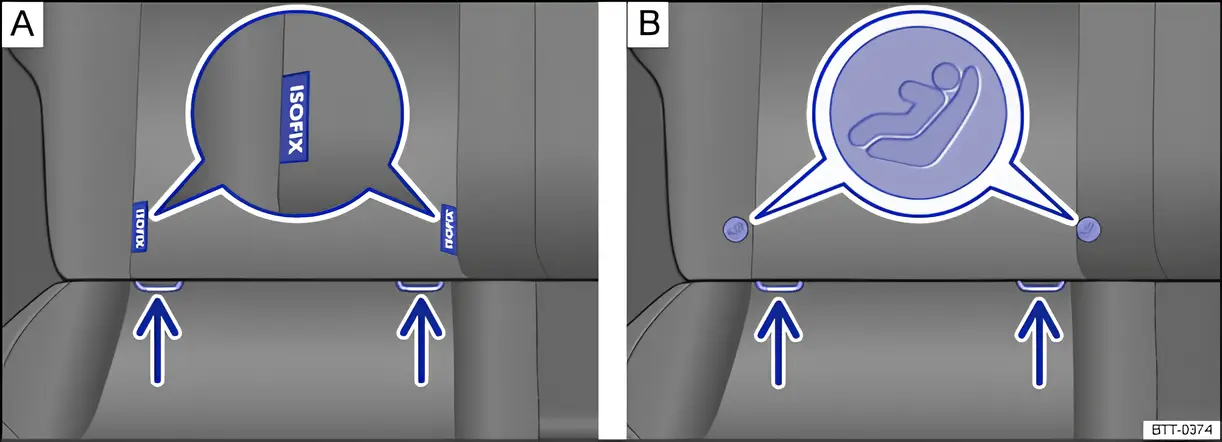
Fig. 65 On the driver seat: marking variants for the lower child seat anchorage points
First read and observe the introductory information and safety warnings .
There are 2 anchorage points, known as lower anchorage points, on each of the outer rear seats.
Overview of ISOFIX child seat installation options
Section titled “Overview of ISOFIX child seat installation options”In accordance with European directive ECE-R 16, the following table lists the options for fitting ISOFIX child seats to the lower anchorage points on the individual seats in the vehicle.
The permissible body weight for the child seat, or the size class A to G for child seats with “universal” or “semi-universal” approval, is given on the label attached to the child seat.
| Group (weight class) | ||||||||||
|---|---|---|---|---|---|---|---|---|---|---|
Group 0: up to 10 kg | Group 0: up to 10 kg | Group 1: 9 to 18 kg | ||||||||
Group 0+: up to 13 kg | ||||||||||
| Fitting direction | rearward facing (against the direction of travel) | rearward facing (against the direction of travel) | rearward facing (against the direction of travel) | forward facing (in the direction of travel) | ||||||
| Size class | F | G | C | D | E | C | D | A | B | B1 |
| Fitting on the front passenger seat | Seats without anchorage points, no ISOFIX securing | |||||||||
| Fitting on the outer rear seats | IL-SU | IL-SU | IL-SU | IUF/IL-SU | ||||||
| Fitting on the centre rear seat | Seat without anchorage points, no ISOFIX securing | |||||||||
X: the seat is not suitable for securing an ISOFIX child seat in this group.
IL-SU: seat suitable for fitting an ISOFIX child seat with “semi-universal” approval; refer to the vehicle list from the child seat manufacturer.
IUF: seat suitable for a forward-facing ISOFIX child seat of the “universal” category that is approved for use in this weight group.
Child seats with rigid anchorages
Section titled “Child seats with rigid anchorages”Guides can be used when fitting a child seat with rigid anchorages. Fitted guides make installation easier and protect the seat covers. Guides are supplied with some child seats, or can be obtained from a Volkswagen dealership. If required, the guides are engaged on both anchorage points in the vehicle ⇒ .
- Read the instructions supplied by the child seat manufacturer before fitting and removing the seat ⇒ .
- Push the child seat onto the anchorage points in the direction of the arrow ⇒ fig. 65. The child seat must engage audibly and correctly.
- Check both sides of the child seat by pulling on it.
Child seats with adjustable retaining straps
Section titled “Child seats with adjustable retaining straps”- Read the instructions supplied by the child seat manufacturer before fitting and removing the seat ⇒ .
- Place the child seat on a flat surface and hook the retaining strap hooks into the anchorage points ⇒ fig. 65.
- Tighten the retaining straps evenly using the corresponding adjusters. The child seat must lie closely against the vehicle seat.
- Check both sides of the child seat by pulling on it.
Securing a child seat with the Top Tether
Section titled “Securing a child seat with the Top Tether”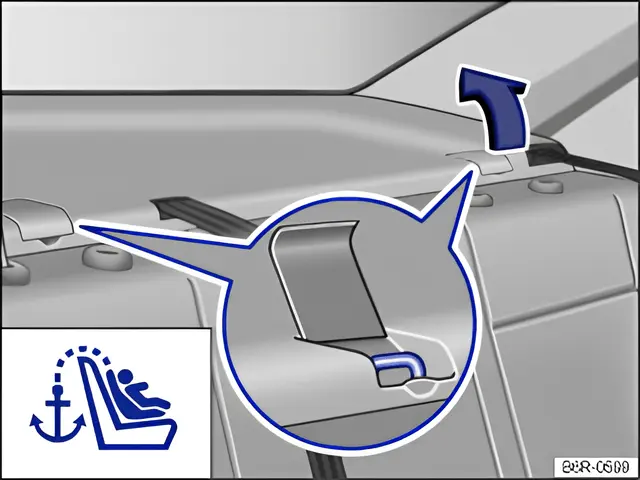
Fig. 66 Anchorage point for the Top Tether on the shelf behind the rear seat
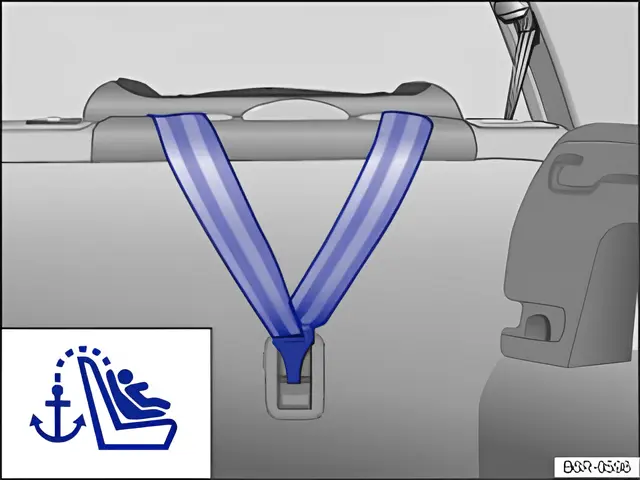
Fig. 67 Retaining strap hooked in place in the luggage compartment
First read and observe the introductory information and safety warnings .
- Read the instructions supplied by the child seat manufacturer before fitting and removing the seat ⇒ .
- Remove the head restraint behind the child seat and stow it safely in the vehicle ⇒ Adjusting the seat position.
- Secure the child seat to the lower anchorage points ⇒ Securing a child seat with the lower anchorage points.
- Remove the luggage compartment cover ⇒ Luggage compartment.
- Route the top tether of the child seat backwards.
- Hook the top tether into the corresponding anchorage point on the shelf behind the rear seats ⇒ fig. 66 or into the anchorage point on the rear backrest in the luggage compartment ⇒ fig. 67.
- Tighten the strap so that the top of the child seat lies against the backrest.
- Refit the luggage compartment cover.
Refit the head restraint after removing the child seat ⇒ Adjusting the seat position.