Vehicle battery
Introduction
Section titled “Introduction”This chapter contains information on the following subjects:
- Warning lamp
- Checking the electrolyte level of the vehicle battery
- Charging, replacing, disconnecting and connecting the vehicle battery
The vehicle battery is a component of the electrical system in the vehicle.
Never carry out any work on the electrical system if you are not familiar with the necessary procedures and the general safety requirements and only unsuitable tools are available ⇒ . The work should be carried out by a qualified workshop if you are uncertain. Volkswagen recommends using a Volkswagen dealership for this purpose. Serious injuries can be caused if work is carried out incorrectly.
Location of the vehicle battery
Section titled “Location of the vehicle battery”The vehicle battery is located in the engine compartment or in the spare wheel well under the temporary spare wheel.
Explanation of the warnings on the vehicle battery
Section titled “Explanation of the warnings on the vehicle battery”| Symbol | Meaning |
|---|---|
| Always wear eye protection! | |
| Electrolyte is very corrosive and caustic. Always wear protective gloves and eye protection! | |
| No fires, sparks, naked lights or smoking! A highly explosive mixture of gases is given off when the vehicle battery is charging! | |
| Always keep children away from acid and the vehicle battery! |
Additional information and warnings
Section titled “Additional information and warnings”- ⇒ Booklet Service schedule
- Pull-away assist systems (start/stop system)
- Preparation for working in the engine compartment
- Accessories, modifications, repairs and renewal of parts
- Starting the engine with jump leads
After starting the engine with a discharged vehicle battery, or after the battery has been changed, system settings (time, date, personal convenience settings and programming) may have been changed or deleted. Check and correct the settings as necessary once the vehicle battery has been sufficiently charged.
Warning lamp
Section titled “Warning lamp”First read and observe the introductory information and safety warnings .
| Lit up | Possible cause | Solution |
|---|---|---|
| Fault in the alternator. | Go to a qualified workshop. The electrical system should be checked. Switch off all electrical equipment that is not required. The vehicle battery will not be charged by the alternator while the vehicle is in motion. |
Several warning and indicator lamps will light up briefly as a functional check when the ignition is switched on. They will switch off after a few seconds.
Checking the electrolyte level of the vehicle battery
Section titled “Checking the electrolyte level of the vehicle battery”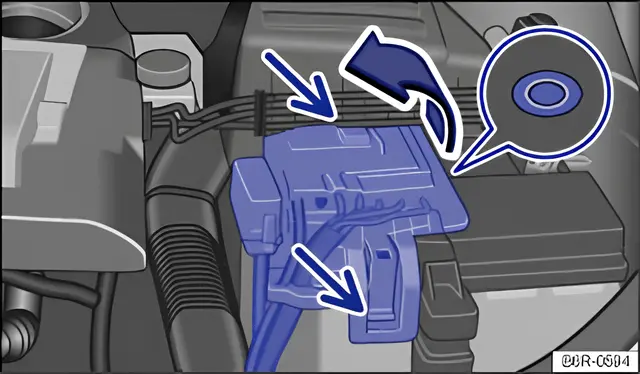
Fig. 143 In the engine compartment: removing the vehicle battery cover
First read and observe the introductory information and safety warnings .
The electrolyte level of the vehicle battery should be checked regularly in high-mileage vehicles, in hot countries and in older vehicle batteries. The vehicle battery is otherwise maintenance-free.
Vehicles with a start/stop system are fitted with special vehicle batteries. For technical reasons, it might not be possible to check the electrolyte level in these vehicle batteries.
In vehicles with the vehicle battery in the spare wheel well, it is not possible to check the electrolyte level without first removing vehicle parts. Seek expert assistance.
Preparations for vehicles with the battery in the engine compartment
Section titled “Preparations for vehicles with the battery in the engine compartment”Pushing the cover aside
Section titled “Pushing the cover aside”Depending on the engine fitted to the vehicle, the vehicle battery cover may have a different design:
- Push the tabs ⇒ fig. 143 (thin arrows) away from the vehicle battery using a screwdriver if necessary, and push the cover to the side in the direction of the arrow (thick arrow).
Checking the electrolyte level
Section titled “Checking the electrolyte level”- Ensure that enough light is available for you to see the colours clearly. Never use naked flames or glowing matter (e.g. cigarettes) as a light source.
- The colour display in the round window on the top side of the vehicle battery will change according to the electrolyte level ⇒ fig. 143 (magnification).
| Colour display | Action |
|---|---|
| Light yellow or without colour | The electrolyte level of the vehicle is too low. The vehicle battery should be checked and replaced by a qualified workshop if necessary. |
| Black | The electrolyte level of the vehicle battery is correct. |
Charging, replacing, disconnecting and connecting the vehicle battery
Section titled “Charging, replacing, disconnecting and connecting the vehicle battery”First read and observe the introductory information and safety warnings .
Charging the battery
Section titled “Charging the battery”The vehicle battery should be charged by a qualified workshop, as the technology used in factory-fitted batteries requires voltage-limited charging ⇒ . Volkswagen recommends using a Volkswagen dealership for this purpose.
Replacing a vehicle battery
Section titled “Replacing a vehicle battery”The battery has been developed to suit the conditions of its location and has special safety features. If a vehicle battery has to be replaced, discuss the electromagnetic compatibility, size and necessary servicing, output and safety requirements for the new vehicle battery with a Volkswagen dealership before purchase. Volkswagen recommends that the vehicle battery is changed by a Volkswagen dealership.
Only maintenance-free vehicle batteries compliant with the standards TL 825 06 and VW 7 50 73 should be used. These standards must be dated April 2008 or later.
Vehicles with start/stop system are equipped with a special vehicle battery. These vehicle batteries may only be replaced by a vehicle battery with the same specifications.
Disconnecting the vehicle battery
Section titled “Disconnecting the vehicle battery”Please note the following if the vehicle battery has to be disconnected from the electrical system in the vehicle:
- Switch off all electrical consumers and the ignition.
- Unlock the vehicle before disconnecting the battery in order to avoid triggering the alarm.
- First disconnect the negative cable and then the positive cable ⇒ .
Connecting the vehicle battery
Section titled “Connecting the vehicle battery”- Switch off all electrical consumers and the ignition before reconnecting the vehicle battery.
- First reconnect the positive cable and then the negative cable ⇒ .
Various indicator lamps may light up after the vehicle battery has been connected and the ignition is switched on. They will go out if you drive a short distance at a speed of 15-20 km/h (10-12 mph). If the indicator lamps remain lit up, the vehicle should be checked by a qualified workshop.
If the vehicle battery was disconnected for long periods, the system may not be able to calculate or correctly display the time when the next service is due ⇒ Service interval display. Comply with the maximum permissible service intervals ⇒ Booklet Service schedule.
Automatic switch-off for electrical consumers
Section titled “Automatic switch-off for electrical consumers”The intelligent vehicle electrical system automatically implements a range of measures to prevent the battery from discharging under high loads:
- The idling speed is increased so that the alternator provides more electricity.
- The performance of large electrical consumers may be reduced or they may be switched off completely.
- The power supply to the 12-volt socket and the cigarette lighter is interrupted temporarily while the engine is being started.
The vehicle electrical system cannot always prevent the vehicle battery from discharging. For example when the ignition is switched on for an extended period with the engine off, or when the side or parking lights are on when the vehicle is parked for an extended period.
What can cause the vehicle battery to discharge?
Section titled “What can cause the vehicle battery to discharge?”- Long periods at a standstill in which the engine is not running, especially if the ignition is switched on.
- The use of electrical consumers when the engine is switched off.
Dispose of the vehicle battery as required by legislation. Batteries may contain toxic substances such as sulphuric acid and lead.
Electrolyte can pollute the environment. Clean up any service fluid leakages and dispose of them properly.