Engine oil
Introduction
Section titled “Introduction”This chapter contains information on the following subjects:
- Warning and indicator lamps
- Engine oil specification
- Checking the engine oil level and refilling engine oil
- Engine oil consumption
- Changing engine oil
Additional information and warnings
Section titled “Additional information and warnings”- ⇒ Booklet Service schedule
- Preparation for working in the engine compartment
- Accessories, modifications, repairs and renewal of parts
Leaking or spilt engine oil can pollute the environment. Spilt operating fluids must be collected and disposed of properly and with respect for the environment.
Warning and indicator lamps
Section titled “Warning and indicator lamps”First read and observe the introductory information and safety warnings .
Lit up | Possible cause | Solution |
|---|---|---|
| Engine oil level is too low. | Switch off the engine. Check the engine oil level. |
Flashes | Possible cause | Solution |
|---|---|---|
| Engine oil pressure is too low. | Do not drive on! Switch off the engine. Check the engine oil level. – Do not drive on or remain at idling speed if the warning lamp is flashing, even if the engine oil level is correct. The engine could otherwise be damaged. Seek expert assistance. | |
| Fault in the engine oil system. | Go to a qualified workshop. The engine oil sensor should be checked. |
Several warning and indicator lamps will light up briefly as a functional check when the ignition is switched on. They will switch off after a few seconds.
Engine oil specification
Section titled “Engine oil specification”First read and observe the introductory information and safety warnings .
The engine oil used must correspond exactly to specifications.
The correct engine oil is important for the function and service life of the engine. A special high quality multigrade oil has been filled at the factory and this can normally be used as an all-season oil.
If possible, only use Volkswagen-approved engine oil ⇒ . To comply with the requirements of the flexible service, only use approved flexible service engine oil that complies with the corresponding VW standard (⇒ Table Permitted engine oil specifications). The engine oils listed are multigrade high-lubricity oils.
Engine oils are constantly being developed and improved. A Volkswagen dealership is always kept up to date on innovations. Volkswagen therefore recommends having engine oil changes done by a Volkswagen dealership.
The quality of the engine oil is not only tailored to the requirements of engines and exhaust gas treatment systems, but also to fuel quality. Due to the way in which a combustion engine works, engine oil always comes into contact with combustion residues and fuel, which has a knock-on effect on the ageing process of the oil.
The quality of fuels can vary greatly between individual markets and this must be taken into account when selecting the correct engine oil.
The use of engine oils compliant with the VW 504 00 and VW 507 00 specifications requires a fuel quality compliant with EN 228 (petrol) and EN 590 (diesel). Engine oils compliant with VW 504 00 and VW 507 00 are therefore unsuitable for use in a large number of markets.
| Permitted engine oil specifications ⇒ | Alternative engine oil specifications ⇒ | ||
|---|---|---|---|
| Engine type | Flexible service QI6 (LongLife) | Fixed service QI1, QI2, QI3, QI4, QI7 (based on time/distance travelled) | Only in the EU, Switzerland, Norway, Japan and Australia a) |
| Petrol engines | VW 504 00 | VW 502 00 | VW 504 00 |
| Diesel engines with diesel particulate filter | VW 507 00 | VW 507 00 | — |
| Diesel engines without diesel particulate filter | VW 507 00 | VW 505 01 | VW 507 00 |
| Autogas engine | VW 502 00 | VW 502 00 | — |
Checking the engine oil level and refilling engine oil
Section titled “Checking the engine oil level and refilling engine oil”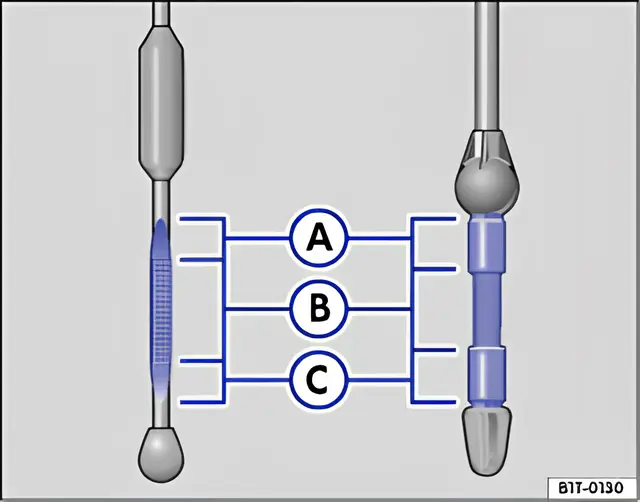
Fig. 138 Oil dipstick with markings
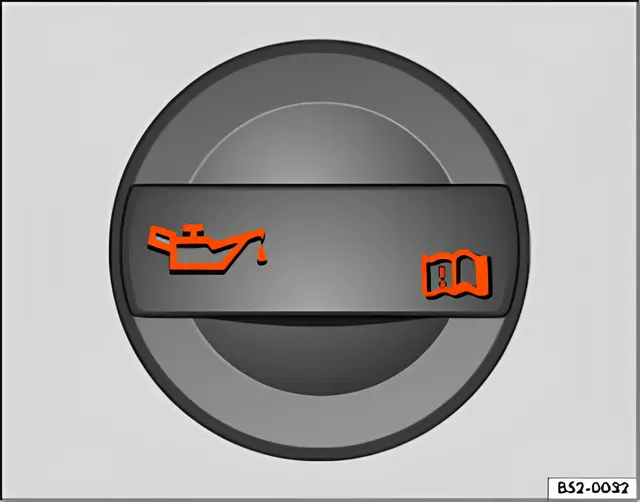
Fig. 139 In the engine compartment: engine oil filler cap
First read and observe the introductory information and safety warnings .
Checklist
Section titled “Checklist”Carry out the steps in the specified order ⇒ :
- With the engine at operating temperature, park the vehicle on a level surface to ensure that the engine oil reading is correct.
- Switch off the engine and wait a few minutes for the engine oil to flow back into the sump.
- Open the bonnet ⇒ Opening and closing the bonnet.
- Identify the engine oil filler cap and oil dipstick. The engine oil filler opening bears the symbol on the cap ⇒ fig. 139 and the oil dipstick has a coloured handle. If you cannot find the cap and dipstick please contact a qualified workshop.
- Pull the dipstick out of the guide tube and wipe it off with a clean cloth.
- Insert the oil dipstick into the guide tube again as far as it will go. If there is a marking on the oil dipstick, this marking must fit in the corresponding groove at the top end of the guide tube when inserting.
- Pull the dipstick out again and read the engine oil level on the dipstick ⇒ fig. 138 as follows:
- A: do not refill oil ⇒ . Continue to step 15.
- B: oil can be refilled (approximately 0.5 l). Continue to step 8 or 15.
- C: oil must be refilled (approximately 1.0 l). Continue to step 8.
- After reading the oil level, push the oil dipstick back into the guide tube as far as it will go.
- Unscrew the engine oil filler opening cap ⇒ fig. 139.
- Using only the engine oil approved by Volkswagen expressly for this engine, top up the oil in small gradual amounts (no more than 0.5 l).
- In order to avoid overfilling, wait for approximately one minute after each refill step to allow the engine oil to flow into the oil sump up to the marking on the engine oil dipstick.
- Read the engine oil level from the dipstick again before refilling with a further small quantity of engine oil. Never overfill engine oil ⇒ .
- After the refilling procedure, the engine oil level should be at least in the centre of area ⇒ fig. 138 B, but never above area A ⇒ .
- After refilling, screw the engine oil filler cap back on correctly.
- Reinsert the oil dipstick correctly into the guide tube as far as it will go.
- Close the bonnet correctly ⇒ Opening and closing the bonnet.
The engine oil level must never be above area A. Otherwise oil can be drawn in through the crankcase breather and escape into the atmosphere via the exhaust system.
Engine oil consumption
Section titled “Engine oil consumption”First read and observe the introductory information and safety warnings .
Engine oil consumption can vary from engine to engine and can change during the working life of an engine.
Depending on how you drive and the conditions in which the car is used, oil consumption can be up to 1.0 litre/2,000 km - and is likely to be higher for the first 5,000 km for new vehicles. The engine oil level must therefore be checked at regular intervals, preferably when refuelling and before long journeys.
When the engine is working hard the oil level must be kept within area ⇒ fig. 138 A, for instance during long motorway cruising in summer, trailer towing or climbing mountain passes.
Changing engine oil
Section titled “Changing engine oil”First read and observe the introductory information and safety warnings .
The engine oil must be changed regularly in accordance with the data given in the service schedule.
The engine oil and filter should always be changed, and used oil disposed of, by a qualified workshop due to the special tools and knowledge required. Volkswagen recommends using a Volkswagen dealership for this purpose.
More details on the service intervals can be found in the service schedule.
Additives in the engine oil can cause new engine oil to discolour quickly. This is normal and does not mean that the engine oil should be changed more frequently.
Before changing the engine oil, first find out where old oil can be disposed of properly near you.
Used oil must be disposed of in accordance with regulations governing the protection of the environment. Never dispose of old oil in locations such as gardens, woods, sewerage systems, on streets and roads, or in rivers and waterways.
Useful links: