Accessories, modifications, repairs and renewal of parts
Introduction
Section titled “Introduction”This chapter contains information on the following subjects:
- Running-in
- Accessories and parts
- Service fluids and consumables
- Repairs and technical modifications
- Repairs and faults in the airbag system
- Retrofitting two-way radios
- Information stored in the control units
- Using a mobile telephone in the vehicle without a connection to the external aerial
- Vehicle lifting points
Additional information and warnings
Section titled “Additional information and warnings”- Seat belts
- Airbag system
- Roof carrier
- Towing a trailer
- Ashtray and cigarette lighter
- Electrical sockets
- Braking, stopping and parking
- Pull-away assist systems
- ParkPilot
- Cruise Control System (CCS)
- Tyre monitoring system
- Preparation for working in the engine compartment
- Engine oil
- Engine coolant
- Battery
- Cleaning and caring for the vehicle exterior
- Cleaning and caring for the interior
- Consumer information
- ⇒ Booklet Radio
- ⇒ Booklet Navigation system
- ⇒ Booklet Provision for a mobile telephone
Running-in
Section titled “Running-in”First read and observe the introductory information and safety warnings .
Please follow the regulations concerning running-in new parts.
Running in a new engine
Section titled “Running in a new engine”Any new engine has to be run in during the first 1,500 kilometres. During its first few hours of running, the internal friction in the engine is greater than later on when all the moving parts have bedded down.
The style of driving during the first 1,500 kilometres will also affect the engine quality. Even after this time - and especially with a cold engine - drive the vehicle at moderate speeds in order to reduce engine wear and to increase the mileage that the engine can cover. Do not drive at engine speeds that are too low. Always shift down gear if the engine is not running smoothly. The following applies up to 1,000 kilometres:
- Do not depress the accelerator fully.
- Do not drive the vehicle at more than 2/3 of the top engine speed.
- Do not drive with a trailer attached.
From 1,000 to 1,500 kilometres, gradually increase driving performance to top speed and highest engine speed.
Running in new tyres and brake pads
Section titled “Running in new tyres and brake pads”If the engine is run in gently, the life of the engine will be increased and its oil consumption reduced.
Accessories and parts
Section titled “Accessories and parts”First read and observe the introductory information and safety warnings .
Volkswagen recommends that you seek advice from a Volkswagen dealership before purchasing accessories, spare parts or service fluids. For example, if the vehicle is to be retrofitted with accessories or if parts have to be renewed. Volkswagen dealerships can recommend accessories, parts and service fluids suitable for your requirements. They can also answer any questions you might have regarding official regulations.
Volkswagen recommends that you only use approved Volkswagen accessories and Volkswagen Genuine Parts®. These parts and accessories have been specially tested by Volkswagen for suitability, reliability and safety. And Volkswagen dealerships are qualified to install them correctly.
Although the market is constantly scrutinised, Volkswagen cannot assume responsibility for the reliability, safety and suitability of products Volkswagen has not approved. Volkswagen can therefore assume no responsibility for these parts, even if they have been approved by an official testing agency or are covered by an official approval certificate.
Any retrofitted equipment which has a direct effect on the vehicle and/or the way it is driven must be approved by Volkswagen for use in your vehicle and bear the e mark (the European Union’s authorization symbol). These devices include cruise control systems or an electronically controlled suspension.
Any additional electrical components fitted that do not serve to control the vehicle itself must bear the CE mark (manufacturer conformity declaration in the European Union). Such devices include refrigerator boxes, laptops and ventilator fans.
Service fluids and consumables
Section titled “Service fluids and consumables”First read and observe the introductory information and safety warnings .
All service fluids and consumables, e.g. toothed belts, tyres, coolant, engine oil, spark plugs and vehicle batteries, are being constantly developed. For this reason, service fluids and consumables should be replaced at a qualified workshop. A Volkswagen dealership is always kept up to date on innovations.
Leaking service fluids can pollute the environment. Spilt service fluids must be collected in suitable containers and disposed of properly and with respect for the environment.
Repairs and technical modifications
Section titled “Repairs and technical modifications”First read and observe the introductory information and safety warnings .
Repairs and modifications must always be carried out according to Volkswagen specifications ⇒ .
Unauthorised modifications to the electronic components or software in the vehicle may cause faults. As the electronic components are linked together in networks, other systems may be affected by the faults. This can seriously impair safety, lead to excessive wear of components, and also invalidate the type approval for the vehicle.
The Volkswagen dealership cannot be held liable for any damage caused by technical modifications and/or work performed incorrectly.
The Volkswagen dealership cannot be held liable for any damage caused by technical modifications and/or work performed incorrectly, nor are these covered by the Volkswagen guarantee.
Volkswagen recommends that all repairs and technical modifications are performed by an authorised Volkswagen dealership using Volkswagen Genuine Parts®.
Vehicles with special auxiliary equipment or body parts
Section titled “Vehicles with special auxiliary equipment or body parts”The manufacturer of these components must ensure that these parts (fittings) adhere to the stipulated environmental laws and regulations, particularly the EU directive 2000/53/EC concerning end-of-life vehicles and EU directive 2003/11/EC concerning the restriction on the marketing and use of certain dangerous substances and preparations.
The vehicle owner should keep all assembly documentation for these auxiliary fittings, and pass it on to any scrapping company later engaged. This is to facilitate environmentally responsible disposal for all vehicles, including refitted vehicles.
Windscreen repairs
Section titled “Windscreen repairs”Some equipment requires electrical or electronic components in order to function, for example components attached to the inside of the windscreen in the area of the interior mirror. If the windscreen is damaged in the field of view of these electrical or electronic components, for example by a stone chip, the windscreen must be replaced. Repairing a stone chip can cause the equipment to malfunction.
After the windscreen has been replaced, the camera and sensors must be adjusted and calibrated by a qualified workshop.
Repairs and faults in the airbag system
Section titled “Repairs and faults in the airbag system”First read and observe the introductory information and safety warnings .
Repairs and modifications must always be carried out according to Volkswagen specifications ⇒ .
Modifications and repairs to the front bumper, the doors, the front seats, the roof, or the bodywork should be carried out by a qualified workshop. System components and airbag system sensors can be located on these vehicle components.
If you work on the airbag system or remove and install parts of the system when performing other repair work, parts of the airbag system may be damaged. The consequence may be that, in the event of an accident, the airbag inflates incorrectly or does not inflate at all.
Regulations must be observed to ensure that the effectiveness of the airbags is not reduced and that removed parts do not cause any injuries or environmental pollution. Qualified workshops are familiar with these requirements.
Any modifications to the vehicle’s suspension could prevent the airbag system from working properly during a collision. For example, using tyre/rim combinations that have not been approved by Volkswagen, lowering the vehicle, making modifications to the suspension rate including work on the springs, struts and shock absorbers could change the forces that are measured by the airbag sensors and sent to the electronic control unit. Some changes to the suspension could cause the forces measured by the sensors to increase. This can lead to the airbag system being triggered in collision scenarios where it normally would not be triggered if modifications to the suspension had not been made. Other modifications can cause the forces measured by the sensors to decrease, therefore preventing the airbag system from being triggered when it should have been.
Retrofitting two-way radios
Section titled “Retrofitting two-way radios”First read and observe the introductory information and safety warnings .
You will need an external aerial to use a two-way radio in the vehicle.
Any retrofit installation of electrical or electronic equipment in the vehicle will affect its vehicle type approval. Under certain circumstances, this can negate the type approval for the vehicle.
Volkswagen has approved the vehicle for use with two-way radios subject to the following conditions:
- Correct installation of external aerial,
- A maximum transmitting power of 10 watts.
The equipment can only operate at maximum range with an external aerial.
Check first with a qualified workshop if you wish to use a two-way radio with a transmitting power of over 10 watts. A qualified workshop is familiar with the technical options for retrofitting. Volkswagen recommends using a Volkswagen dealership for this purpose.
Please comply with relevant legislation and the instructions and information given in the operating manuals for radio equipment.
Information stored in the control units
Section titled “Information stored in the control units”First read and observe the introductory information and safety warnings .
Your vehicle is factory fitted with electronic control units which are responsible for engine and gearbox management. The control units also monitor the function of the exhaust system and the airbags.
These electronic control units continuously evaluate data relevant to the vehicle while the vehicle is being driven. Only these data will be stored if there are any faults recorded or any deviations from the specified values. This is generally displayed by the indicator lamps on the instrument cluster.
Special units are required to read and evaluate data stored in the control units.
These data are stored so that specialist workshops can diagnose and solve problems. The following data may have been stored:
- Engine and gearbox-relevant data.
- Speed.
- Direction of travel.
- Braking power.
- Seat belt monitor.
The control units never record conversations that take place in the vehicle. It is neither possible nor permitted to use the stored data to create movement profiles.
When the vehicle is being used, situations may arise in which the stored data (alone or in conjunction with other information such as accident reports, vehicle damage, witness statements etc.) can become assignable to a particular person, whereby consultation of an expert and use of the expert’s information may be necessary.
In vehicles with an emergency call function via a mobile telephone or other units, the current location can be transmitted. In the event of an accident in which the control units register that an airbag has been triggered, the system can automatically send out a signal. This depends on your service provider. Transmission is possible only in areas with a sufficiently strong mobile telephone signal.
Additional functions that are contractually agreed with the customer, e.g. vehicle positioning in an emergency, allow certain vehicle data to be transmitted from the vehicle.
Event data recorder
Section titled “Event data recorder”The vehicle is not fitted with an event data recorder.
Event data recorders temporarily store vehicle information. This provides precise information in the event of an accident. In vehicles with an airbag system, data that might be relevant in the event of an accident can be stored, e.g. impact speed, belt buckle status, seat positions and trigger speed. The scope of the data is manufacturer-specific.
An event data recorder may only be fitted if the owner has approved the procedure. This is covered by legislation in some countries.
Reprogramming control units
Section titled “Reprogramming control units”All data for the control of components are stored in the control units. Some convenience functions, such as lane change flash, single door unlocking and displays, can be reprogrammed using special workshop equipment. If this is the case, the descriptions in your vehicle wallet will no longer correspond with the original functions. Volkswagen recommends that you have any reprogramming confirmed in the service schedule under Workshop comments.
Information about possible reprogramming can be obtained from the Volkswagen dealership.
Reading the vehicle’s event memory
Section titled “Reading the vehicle’s event memory”There is a diagnostic interface for reading the event memories in the vehicle interior ⇒ . Data relating to the function and status of the electronic control units are stored in the event memory. Additional information on the stored data is available from qualified workshops.
The diagnosis interface is located in the footwell on the driver side behind a cover next to the lever for opening the bonnet.
The event memory should only be read and reset by a qualified workshop.
After a fault has been rectified, the information in the memory pertaining to the fault is deleted. Other memory content is overwritten on an ongoing basis.
Using a mobile telephone in the vehicle without a connection to the external aerial
Section titled “Using a mobile telephone in the vehicle without a connection to the external aerial”First read and observe the introductory information and safety warnings .
Both during telephone calls and in standby mode, mobile telephones transmit and receive radio waves, which may also be termed “high-frequency energy”. Current scientific literature warns us that radio waves can be harmful to human beings if they exceed certain limits. Government bodies and international committees have introduced threshold values and guidelines to ensure that electromagnetic radiation produced by mobile telephones does not pose a hazard to health. However, there is no proven scientific evidence that demonstrates that cordless telephones are absolutely safe.
For this reason, some experts are calling for more precautions to be taken in the use of mobile telephones, by taking steps to reduce the level of personal exposure to electromagnetic radiation.
If a mobile telephone that is not connected to the vehicle’s external aerial is used inside the vehicle, the level of electromagnetic radiation could be higher than when the mobile telephone is connected to an integrated aerial or any other external aerial.
If the vehicle is fitted with a suitable hands-free unit which enables the use of innumerable additional functions of Bluetooth® compatible mobile telephones, this will satisfy the legal requirements in many countries which permit the use of a mobile telephone in a vehicle only if a hands-free unit is used.
The factory-fitted hands-free system in your vehicle has been developed for use with mobile telephones that are compatible with Bluetooth®. Mobile telephones must be located in a suitable telephone holder or be stored securely in the vehicle. If a telephone holder is used it must be securely attached to the base plate. This is the only way to ensure that the mobile telephone is securely attached to the dash panel and always within reach of the driver. Depending on which hands-free system is installed, the connection between the mobile telephone and the external aerial is established either via the telephone holder or via an existing Bluetooth® connection between the mobile telephone and the vehicle.
Connecting the mobile telephone to a telephone aerial integrated in the vehicle or to an external telephone aerial reduces the electromagnetic radiation generated by the telephone which could affect the human body. Using an aerial also improves the quality of the signal.
If a mobile telephone is used in the vehicle interior without this hands-free system, it is not safely secured in the vehicle and also not connected to the vehicle’s external telephone aerial. Furthermore, the mobile telephone is not being charged in the telephone holder. It is also likely that the telephone connection will be disrupted and the signal strength will be poor.
A mobile telephone should only be used in the vehicle if it is connected to a hands-free unit. Volkswagen recommends the use of an external aerial when using a mobile telephone in the vehicle.
Bluetooth® is a registered trademark of Bluetooth® SIG, Inc.
Vehicle lifting points
Section titled “Vehicle lifting points”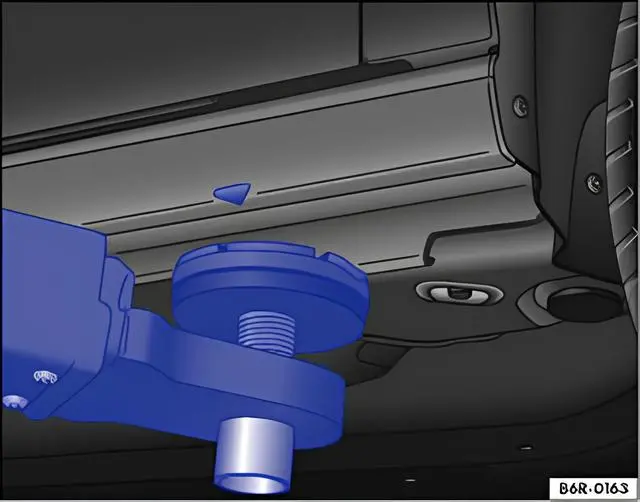
Fig. 152 Lifting points at front for the lifting platform or vehicle jack
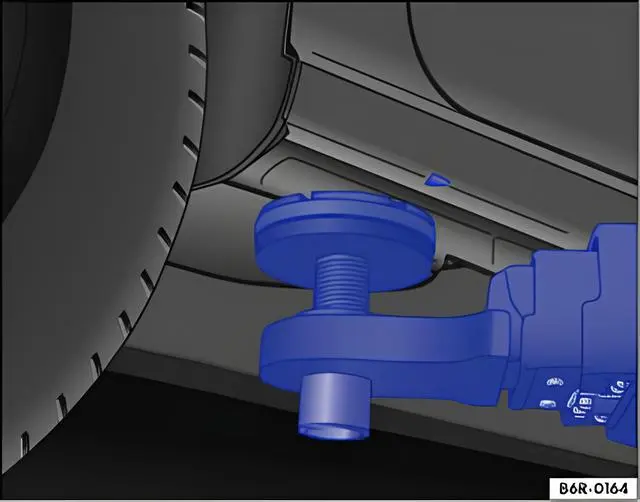
Fig. 153 Lifting points at rear for the lifting platform or vehicle jack
First read and observe the introductory information and safety warnings .
The vehicle may only be lifted at the points shown in the illustrations ⇒ fig. 152 and ⇒ fig. 153. If the vehicle is not raised on the lifting points shown, the vehicle could be damaged ⇒ . There is also a risk of serious injury ⇒ .
Lifting platforms with fluid filled cushions (receiving platforms) may not be used for lifting the vehicle.
There are many precautions that have to be followed when lifting a vehicle on a workshop hoist or floor jack. Do not try to lift a vehicle on a lifting platform or vehicle jack unless you have the training, knowledge and experience to be able to do so safely.