Seat belts
Introduction
Section titled “Introduction”This chapter contains information on the following subjects:
- Warning lamp
- Frontal collisions and the laws of physics
- What happens to vehicle occupants not wearing seat belts
- Seat belts protect
- Using seat belts
- Fastening and unfastening seat belts
- Seat belt routing
- Seat belt height adjustment
- Belt retractor, belt tensioners and belt force limiter
- Servicing and disposal of belt tensioners
Check the condition of all seat belts regularly. If the belt webbing, the belt connections, the belt retractor or the belt latch of a seat belt is damaged, have the seat belt renewed immediately by a qualified workshop ⇒ . The qualified workshop must use the correct replacement parts, suitable for the vehicle, the equipment and the model year. Volkswagen recommends using a Volkswagen dealership for this purpose.
Additional information and warnings:
Section titled “Additional information and warnings:”- Adjusting the seat position
- Airbag system
- Child seats (accessories)
- Stowage compartments
- Cleaning and caring for the interior
- Accessories, parts replacement, repairs and modifications
Warning lamp
Section titled “Warning lamp”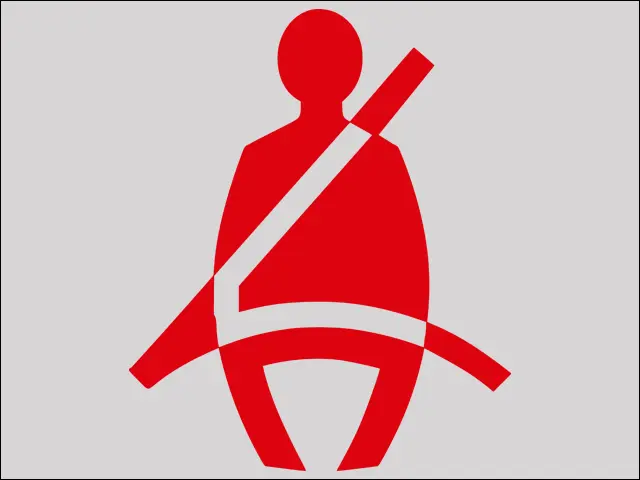
Fig. 44 Warning lamp in the instrument cluster
First read and observe the introductory information and safety warnings .
| Lights up or flashes | Possible cause | Solution |
|---|---|---|
The seat belt of the driver or of the front passenger is not fastened, if the front passenger seat is occupied. | Fasten the seat belts | |
| OR: objects are lying on the front passenger seat. | Remove the objects from the front passenger seat and stow them safely. |
Some warning and indicator lamps light up for a function check when the ignition is switched on. They go out after a few seconds.
If the seat belts are not fastened before setting off and at speeds above approximately 25 km/h (15 mph), or if they are unfastened while the vehicle is in motion, an audible warning will sound for a few seconds. The warning lamp will also flash ⇒ fig. 44.
The warning lamp only goes out once the driver and front passenger have fastened their seat belts with the ignition switched on.
Frontal collisions and the laws of physics
Section titled “Frontal collisions and the laws of physics”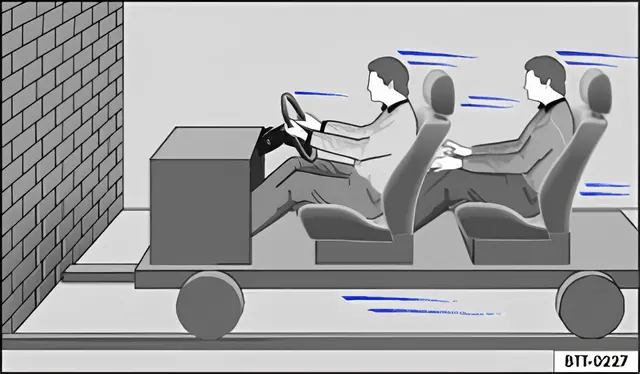
Fig. 45 A vehicle with unbelted occupants is driving towards a wall
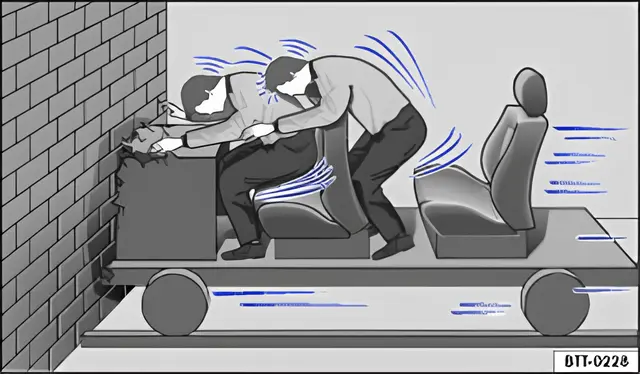
Fig. 46 A vehicle with unbelted occupants collides with a wall
First read and observe the introductory information and safety warnings .
The physical principle behind a frontal collision is easy to explain. As soon as the vehicle is in motion ⇒ fig. 45, energy of motion, known as “kinetic energy”, is generated in both the vehicle and its occupants.
The higher the speed and the greater the weight, the more energy has to be dissipated in a collision.
The speed of the vehicle is, however, the most important factor. If the speed doubles from approximately 25 km/h (15 mph) to approximately 50 km/h (31 mph), for example, the energy of motion increases fourfold.
The amount of “kinetic energy” depends largely on the speed of the vehicle, the weight of the vehicle and the number of occupants. The higher the speed and the greater the weight, the more energy has to be dissipated in a collision.
Vehicle occupants who are not wearing seat belts are not “connected” to the vehicle. In a frontal collision, these occupants will continue to move at the speed the vehicle was travelling at just before the collision, until something stops them. As the occupants in this example are not wearing seat belts, their entire energy of motion will be dissipated by the impact with the wall ⇒ fig. 46.
At speeds of approximately 31 km/h (19 mph) to approximately 50 km/h (31 mph), the forces acting on the body in a collision can exceed 1 tonne (1,000 kg). The forces acting on the body are even greater at higher speeds.
This example applies not only to frontal collisions, but to all types of accidents and collisions.
What happens to vehicle occupants who have not fastened their seat belts
Section titled “What happens to vehicle occupants who have not fastened their seat belts”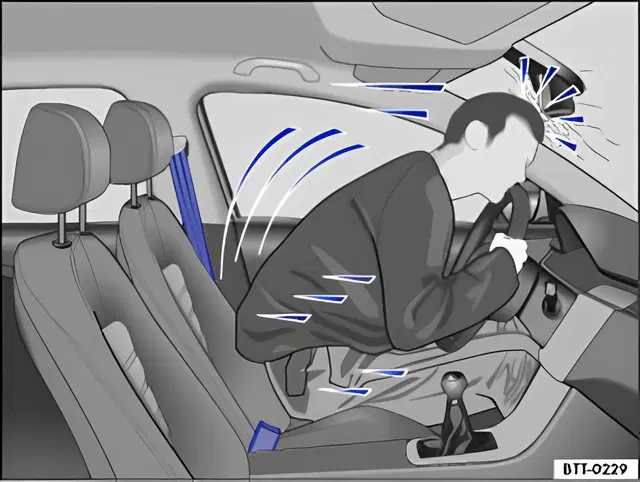
Fig. 47 An unbelted driver is thrown forwards
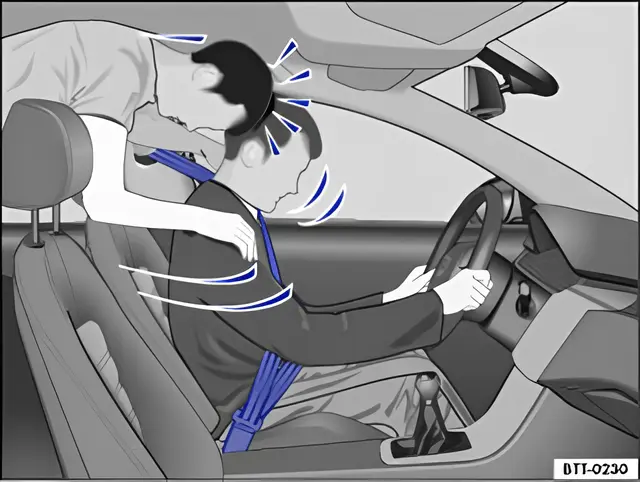
Fig. 48 An unbelted passenger on the rear seat is thrown forwards onto the driver
First read and observe the introductory information and safety warnings .
Many people believe that they can support themselves with their hands in a minor collision. This is not true.
Even at low speeds, the forces acting on the body in a collision cannot be withstood with the arms and hands. In a frontal collision, unbelted occupants will be thrown forwards and could strike parts of the interior, such as the steering wheel, the dash panel or the windscreen, in an uncontrolled manner ⇒ fig. 47.
The airbag system is not a substitute for seat belts. An airbag only provides additional protection when it is triggered. The airbags are not triggered in every type of accident. Even if the vehicle is equipped with an airbag system, all occupants, including the driver, must fasten their seat belts and keep them fastened properly while the vehicle is in motion. This reduces the risk of severe or fatal injuries in an accident, regardless of whether an airbag is fitted for that seat.
An airbag is only triggered once. For the best possible protection, the seat belts must always be fastened correctly, so that they also provide protection in accidents in which the airbags are not triggered. Unbelted occupants can be thrown out of the vehicle and sustain severe or fatal injuries as a result.
Passengers on the rear seats must also fasten their seat belts correctly, as they could be thrown around the vehicle in an uncontrolled manner in an accident. An unbelted passenger on a rear seat endangers not only themselves, but also the driver and the other occupants ⇒ fig. 48.
Seat belt protection
Section titled “Seat belt protection”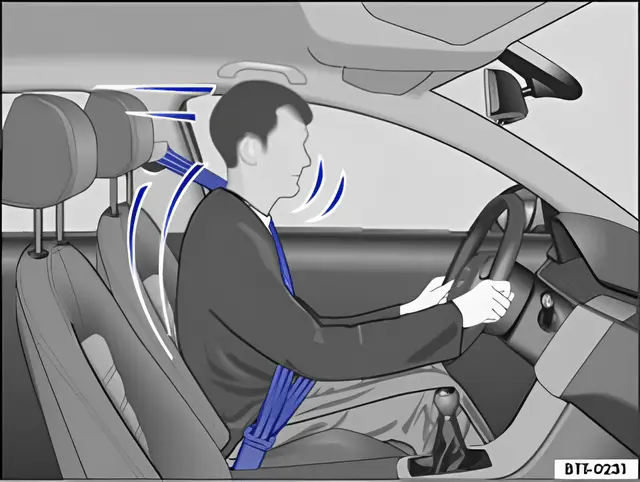
Fig. 49 The driver is held in place by the seat belt during a sudden braking manoeuvre
First read and observe the introductory information and safety warnings .
Correctly fastened seat belts can make a considerable difference. Correctly fastened seat belts hold the occupants in the correct sitting position and considerably reduce the energy of motion in an accident. They also help to prevent uncontrolled movements, which can themselves cause severe injuries. In addition, correctly fastened seat belts reduce the risk of being thrown out of the vehicle ⇒ fig. 49.
Occupants wearing their seat belts correctly benefit greatly from the fact that the kinetic energy is absorbed by the seat belts. The structure of the front of the vehicle and other passive safety features, such as the airbag system, also help to dissipate the energy of motion. The energy generated is therefore reduced, which lowers the risk of injury.
These examples describe a frontal collision. Correctly fastened seat belts obviously also reduce the risk considerably in all other types of accident. Always fasten your seat belt before setting off, even if you are “only driving round the corner”. Also make sure that your passengers have fastened their seat belts correctly.
Road accident statistics show that correctly fastened seat belts considerably reduce the risk of injury and increase the chances of survival in a serious collision. Correctly fastened seat belts also improve the effectiveness of the airbags in a collision. For this reason, wearing seat belts is a legal requirement in most countries.
Even though the vehicle is equipped with airbags, the seat belts must still be fastened. The front airbags, for example, are only triggered in certain frontal collisions. The front airbags are not triggered in minor frontal collisions, minor side collisions, rear-end collisions, rollovers or accidents in which the triggering threshold in the control unit is not exceeded.
Always wear your seat belt and make sure that your passengers have fastened their seat belts correctly before setting off.
Using seat belts
Section titled “Using seat belts”First read and observe the introductory information and safety warnings .
Checklist
Section titled “Checklist”Using the seat belt ⇒ :
- Check the condition of all seat belts regularly.
- Keep the seat belts clean.
- Always keep foreign objects and liquids away from the belt webbing, the latch plate and the belt buckle slot.
- Never trap or damage the seat belt or the latch plate, for example when closing a door.
- Never remove, modify or repair the seat belt or its anchorage points.
- Always fasten the seat belt correctly before setting off and keep it fastened while the vehicle is in motion.
Twisted seat belt
Section titled “Twisted seat belt”If the seat belt is difficult to pull out of the belt guide, the belt may have twisted inside the side trim panel because it retracted too quickly after being unfastened:
- Slowly and carefully pull the seat belt all the way out by the latch plate.
- Untwist the seat belt and guide it slowly back in by hand.
If the twist in the seat belt cannot be removed, fasten the seat belt anyway. The twist must not be in the area that lies directly against the body. Visit a qualified workshop immediately to have the twist removed.
Fastening and unfastening seat belts
Section titled “Fastening and unfastening seat belts”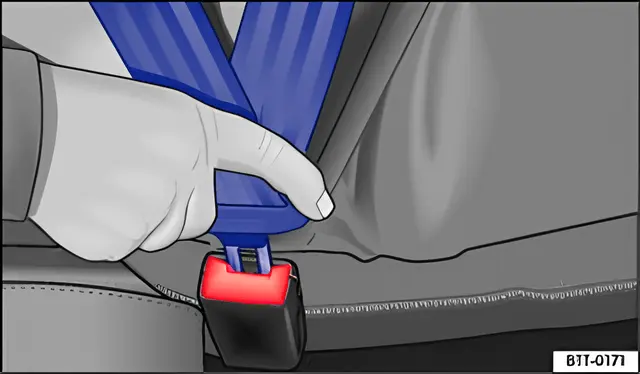
Fig. 50 Inserting the latch plate into the belt buckle
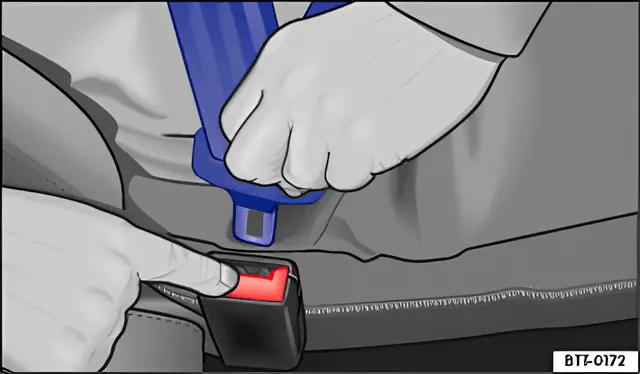
Fig. 51 Releasing the latch plate from the belt buckle
First read and observe the introductory information and safety warnings .
Correctly fastened seat belts hold the occupants in the correct position during a braking manoeuvre or an accident, so that they can provide maximum protection ⇒ .
Fastening the seat belts
Section titled “Fastening the seat belts”Fasten the seat belt before every journey
- Adjust the front seat and the head restraint correctly
- Secure the rear backrest in the upright position ⇒ .
- Take hold of the belt webbing by the latch plate and pull it evenly across the chest and the pelvis. Do not twist the belt webbing while doing so ⇒ .
- Insert the latch plate securely into the belt buckle belonging to that seat ⇒ fig. 50.
- Pull on the seat belt to check that the latch plate has engaged properly in the belt buckle.
Unfastening the seat belts
Section titled “Unfastening the seat belts”Only unfasten the seat belt when the vehicle is stationary ⇒ .
- Press the red button on the belt buckle ⇒ fig. 51. The latch plate springs out.
- Guide the seat belt back in by hand, so that the belt webbing retracts more easily, the seat belt does not twist and the trim is not damaged.
Seat belt routing
Section titled “Seat belt routing”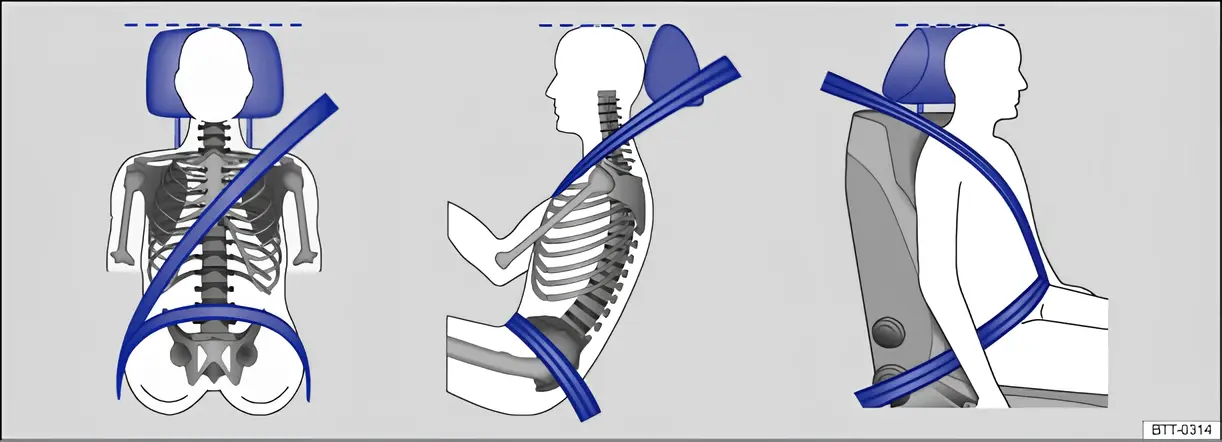
Fig. 52 Correct seat belt routing and correct head restraint adjustment
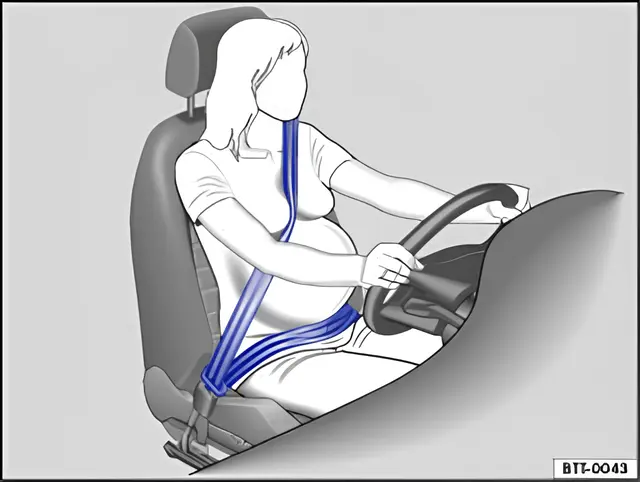
Fig. 53 Correct seat belt routing for pregnant women
First read and observe the introductory information and safety warnings .
Fastened seat belts only provide optimal protection in an accident and reduce the risk of severe or fatal injuries if the belt routing is correct. Correct belt routing also holds the occupant in a position in which a deploying airbag can provide maximum protection. Always fasten your seat belt and make sure that the belt routing is correct.
An incorrect sitting position can cause severe or fatal injuries ⇒ Adjusting the seat position.
Correct seat belt routing
Section titled “Correct seat belt routing”- The shoulder part of the seat belt must always run across the middle of the shoulder, never across the neck, across the upper arm, under the arm or behind the back.
- The lap part of the seat belt must always run across the pelvis, never across the abdomen.
- The seat belt must always lie flat and firmly against the body. Tighten the belt webbing slightly if necessary.
For pregnant women, the seat belt must run evenly and lie flat across the chest and as low as possible below the abdomen, so that no pressure is exerted on the lower abdomen - throughout the entire pregnancy ⇒ fig. 53.
Correct seat belt routing according to height
Section titled “Correct seat belt routing according to height”The seat belt routing can be adapted using the following equipment:
Anyone who is unable to achieve optimal seat belt routing due to their physical build should contact a qualified workshop about possible special modifications, to ensure the optimal protective effect of the seat belts and the airbags. Volkswagen recommends using a Volkswagen dealership for this purpose.
Belt height adjuster
Section titled “Belt height adjuster”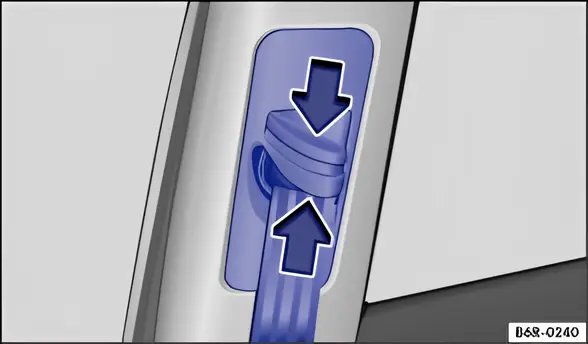
Fig. 54 Next to the front seats: seat belt height adjustment
First read and observe the introductory information and safety warnings .
The seat belt height adjustment on the front seats can be used to adapt the seat belt routing in the shoulder area to suit your height, so that the belt can be fastened correctly:
- Press the belt guide in the direction of the arrows and hold it ⇒ fig. 54.
- Move the belt guide up or down until the seat belt runs across the middle of the chest ⇒ Seat belt routing.
- Release the belt guide.
- Pull the belt guide backwards to check that it has engaged.
Belt retractor, belt tensioners and belt force limiter
Section titled “Belt retractor, belt tensioners and belt force limiter”First read and observe the introductory information and safety warnings .
The seat belts in the vehicle are part of the safety concept ⇒ Airbag system and include the following important functions:
Automatic belt retractor
Section titled “Automatic belt retractor”The seat belts for the driver seat, the front passenger seat and the outer rear seats (and, depending on the equipment, for the centre rear seat as well) are equipped with a belt retractor in the shoulder part of the belt. If the seat belt is pulled out slowly, or during normal driving, the shoulder part of the belt allows complete freedom of movement. However, the belt retractor locks the seat belt when it is pulled out quickly, during heavy braking, when driving in hilly terrain, in bends and during acceleration.
Belt tensioners
Section titled “Belt tensioners”The seat belts for the occupants of the front seats are equipped with belt tensioners. The belt tensioners are activated by sensors in frontal, side and rear-end collisions of sufficient severity and tension the seat belts in the opposite direction to that in which they are pulled out. Any slack in the seat belt is taken up, which reduces the forward movement of the occupant or their movement in the direction of the impact. The belt tensioners work in conjunction with the airbag system. The belt tensioners are not triggered if the vehicle rolls over and the side airbags or the combined head and side airbags are not activated.
A fine dust may be produced when the belt tensioners are triggered. This is normal and does not mean that there is a fire in the vehicle.
Belt tension limiter
Section titled “Belt tension limiter”The belt force limiter reduces the force exerted on the body by the seat belt in an accident.
All safety regulations must be observed before the vehicle or individual system components are scrapped. These regulations are known to qualified workshops ⇒ Servicing and disposal of belt tensioners
Service and disposal of belt tensioners
Section titled “Service and disposal of belt tensioners”First read and observe the introductory information and safety warnings .
When working on the belt tensioner, and when removing and fitting other vehicle parts during repair work, the seat belt could be damaged without this being visible. This could mean that the belt tensioners do not work properly, or do not work at all, in an accident.
The applicable regulations must be observed to ensure that the effectiveness of the belt tensioners is not impaired and that removed components do not cause any injuries or environmental damage. These regulations are known to qualified workshops.
The airbag modules and belt tensioners contain perchlorate. Observe the legal requirements for disposal.